
Tankless Water Heater Installation Requirements: Complete Planning Guide
Understanding this system can save you thousands of dollars and weeks of frustration. Tankless units demand specific electrical capacity, gas line sizing, and venting configurations. According to the Department of Energy, proper installation planning prevents the costly mistakes that plague roughly 30% of DIY tankless projects in 2026.
Essential Tankless Water Heater Installation Requirements You Need to Know
Meeting the unit isn't optional for safe, efficient operation. Gas models need ¾-inch gas lines versus ½-inch for tank heaters. Electric units require dedicated 240-volt circuits rated 100-200 amps. Minimum water pressure: 30-80 PSI. The installation cost guide shows these requirements can add $500 to $2,000 to your total project budget.
What Do You Need Before Installing?
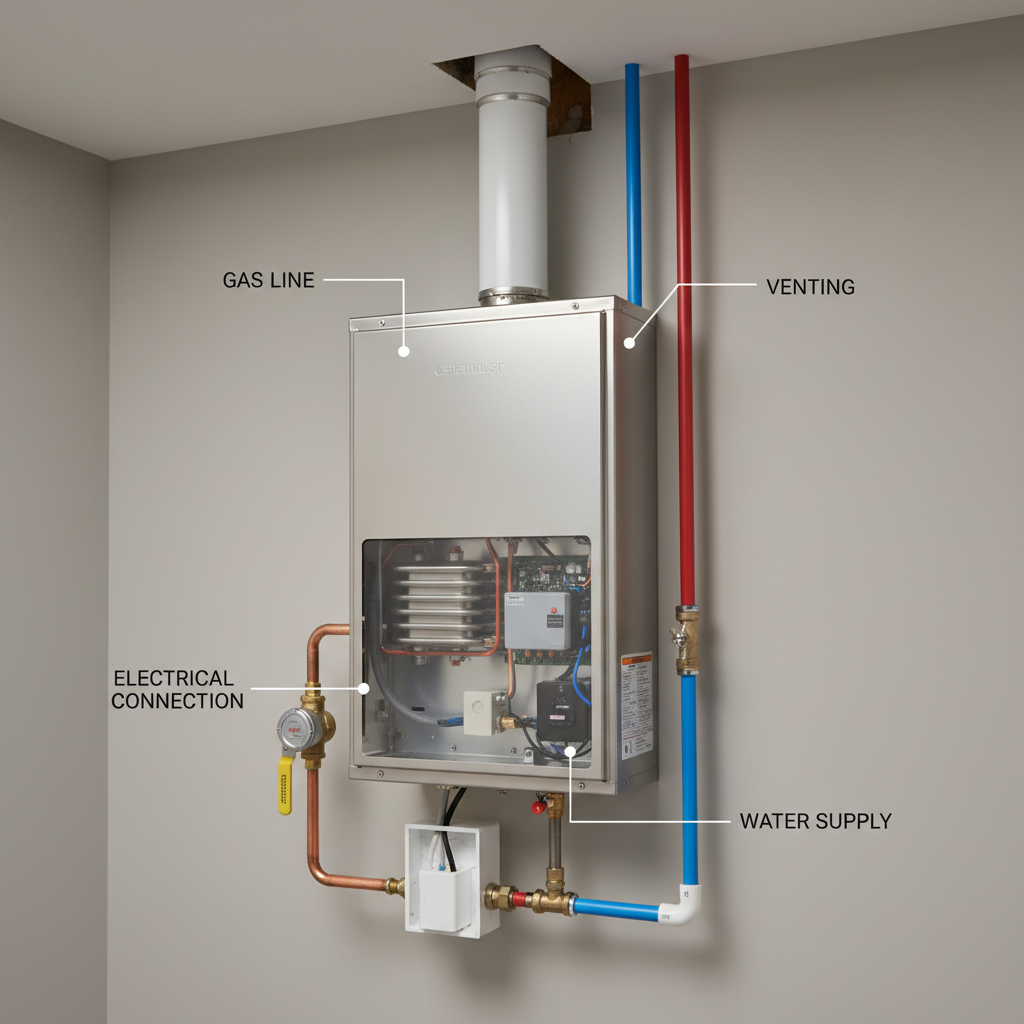
The core infrastructure components you'll need to address fall into four main categories that determine whether your home can support on-demand water heating technology.
-
Gas line sizing must match your unit’s BTU requirements, typically ranging from 150,000 to 200,000 BTU for whole-home models. Most tankless water heater installation specifications require at least a 3/4-inch gas line, though high-demand units may need 1-inch diameter piping to ensure adequate fuel flow without pressure drops.
-
Electrical upgrades often include a dedicated 120-volt circuit for electronic ignition and controls, even for gas models. Electric tankless units demand significantly more power, requiring 100 to 150 amps of service capacity with multiple double-pole breakers, which may necessitate a complete electrical panel upgrade in older homes.
-
Venting systems differ drastically from traditional tank heaters; most modern units require Category III stainless steel or PVC venting that routes combustion gases directly outdoors. Proper venting prevents carbon monoxide buildup and must comply with manufacturer specifications for length, termination location, and vertical rise, which you can explore further in our installation cost guide.
-
Water supply specifications include minimum flow rates of 0.5 GPM to activate the unit and inlet pressures between 30 and 80 PSI for optimal performance. You will typically need 3/4-inch water lines, plus isolation valves on both the hot and cold sides to facilitate maintenance without shutting down your entire plumbing system.
-
Permit requirements vary by jurisdiction but typically include plumbing, electrical, and gas permits for comprehensive installations. Building inspectors verify that your tankless water heater installation meets local codes for combustion air, clearances from windows and property lines, and proper earthquake strapping in seismic zones.
Professional Installation vs DIY Considerations
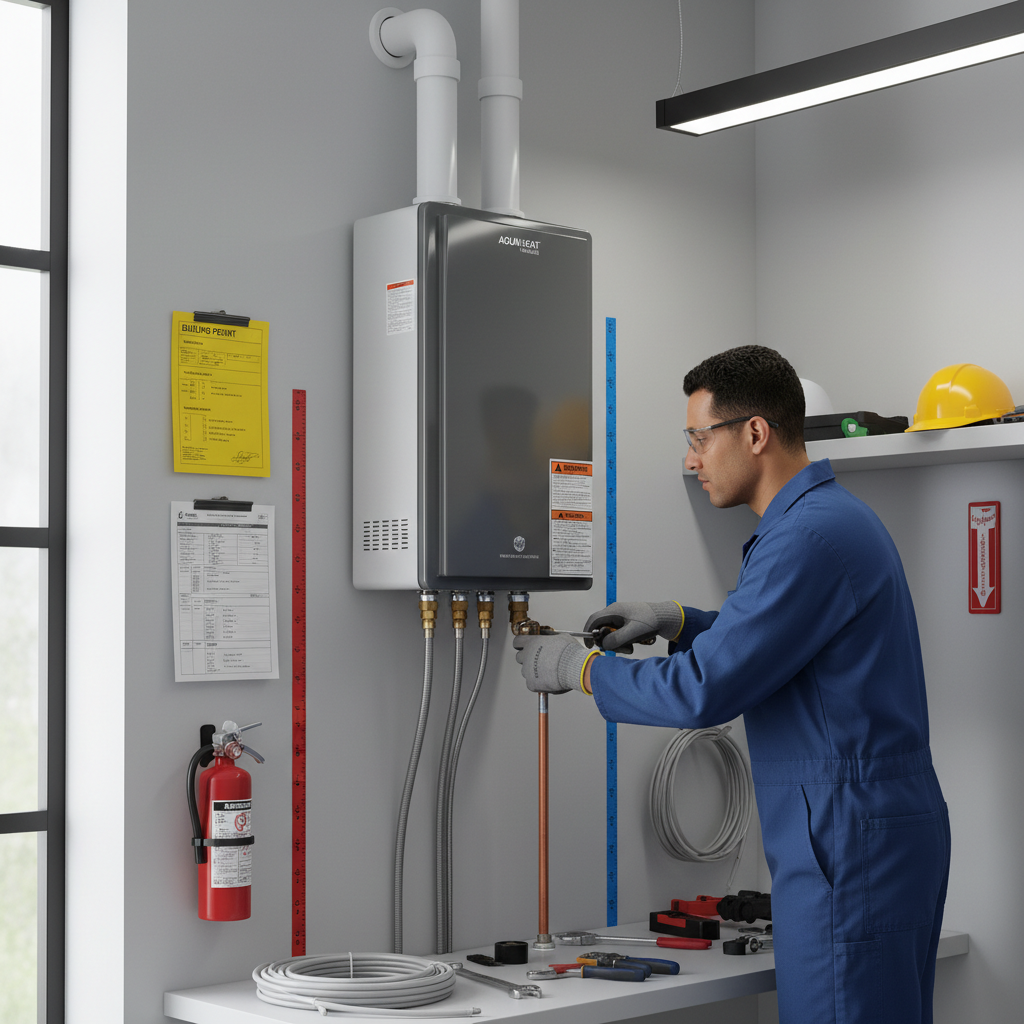
This equipment demand specialized knowledge. Gas models risk carbon monoxide exposure. Electric units need dedicated high-amperage circuits. In 2026, building permits are mandatory in most jurisdictions for this type of upgrade, requiring inspections that verify code compliance. Before making your decision, review the tankless water heater to understand where professional expertise saves you money long-term, and consult the electric unit setup documentation if you're considering that route.
What are the basic tankless water heater installation requirements?
Installation requires adequate electrical or gas supply capacity, proper ventilation (for gas models), sufficient water pressure, and appropriate clearances around the unit. Electric tankless units typically require a 120–200 amp service with dedicated circuits, while gas models require dedicated venting to the exterior and a natural gas or propane line with sufficient BTU capacity. Additionally, you will need access to cold water supply lines and hot water distribution plumbing. Most installations require professional service and permits to ensure compliance with local building codes, particularly for gas and electrical connections.
Do I need to upgrade my electrical panel for a tankless water heater?
Most homeowners must upgrade their electrical panel when installing an electric tankless water heater. These units draw significant power, with whole-house models often requiring 150 to 200 amps of dedicated service. If your home currently has a standard 100-amp or an older 60-amp panel, an upgrade will be necessary before installation. In 2026, the cost for a panel upgrade typically ranges from $1,800 to $4,500, depending on your home’s existing infrastructure. While gas tankless models do not have this high-amperage requirement, they may still require a dedicated 120V outlet for the control panel and ignition system.
What venting is required for a gas tankless water heater?
Gas tankless water heaters require either Category III stainless steel venting or PVC/CPVC venting, depending on whether they are non-condensing or condensing models. Non-condensing units produce hotter exhaust gases and require metal venting that withstands temperatures up to 500°F. Condensing models operate at lower temperatures, allowing for the use of more cost-effective PVC piping. Additionally, you must ensure a proper intake air supply, either through direct outdoor venting or sufficient indoor combustion air. The venting must terminate outside according to specific clearances from windows, doors, and property lines as outlined in the gas heater installation process.