
Water Heater Maintenance Checklist: Protect Your Investment & Extend Lifespan
Your water heater works behind the scenes until something goes wrong, but regular preventive care prevents most problems before they start. Regular maintenance protects your investment, ensures safe operation, and extends your system's lifespan by years. This guide walks you through essential tasks and seasonal strategies that keep your water heater running efficiently, from simple inspections you can do yourself to water heater troubleshooting steps for when issues arise.
Water Heater Maintenance Checklist: Essential Tasks to Perform
Check your water heater by draining sediment, testing the pressure relief valve, and inspecting for leaks around connections and tank. Start by testing your pressure relief valve monthly to ensure it's functioning properly, then schedule water heater repair if it doesn't reset. You should also inspect the anode rod annually, as corrosion protection extends tank life significantly. According to Pf Plumbing, your water heater is one of the most essential appliances in your home. These foundational tasks form the basis of any effective maintenance routine, helping you avoid costly water heater repair calls while ensuring reliable hot water delivery. Professional water heater repair is recommended when you notice rust-colored water or hear unusual noises from the tank.
Inspecting Connections and Valves Monthly
Your water heater maintenance checklist should begin with inspecting the pressure relief valve monthly by lifting its handle briefly to ensure water flows. Check for sediment buildup by listening for rumbling sounds during heating cycles, which signals mineral deposits reducing efficiency. These foundational tasks prevent costly repairs and extend your system's operational lifespan significantly.
Flushing the Tank Annually for Peak Performance
Your water heater maintenance checklist should prioritize three core tasks that directly impact system longevity and safety. First, drain sediment from the tank annually to restore heating efficiency and prevent mineral buildup that reduces performance. Second, test your pressure relief valve quarterly to ensure it opens properly and protects against dangerous pressure spikes inside the tank.
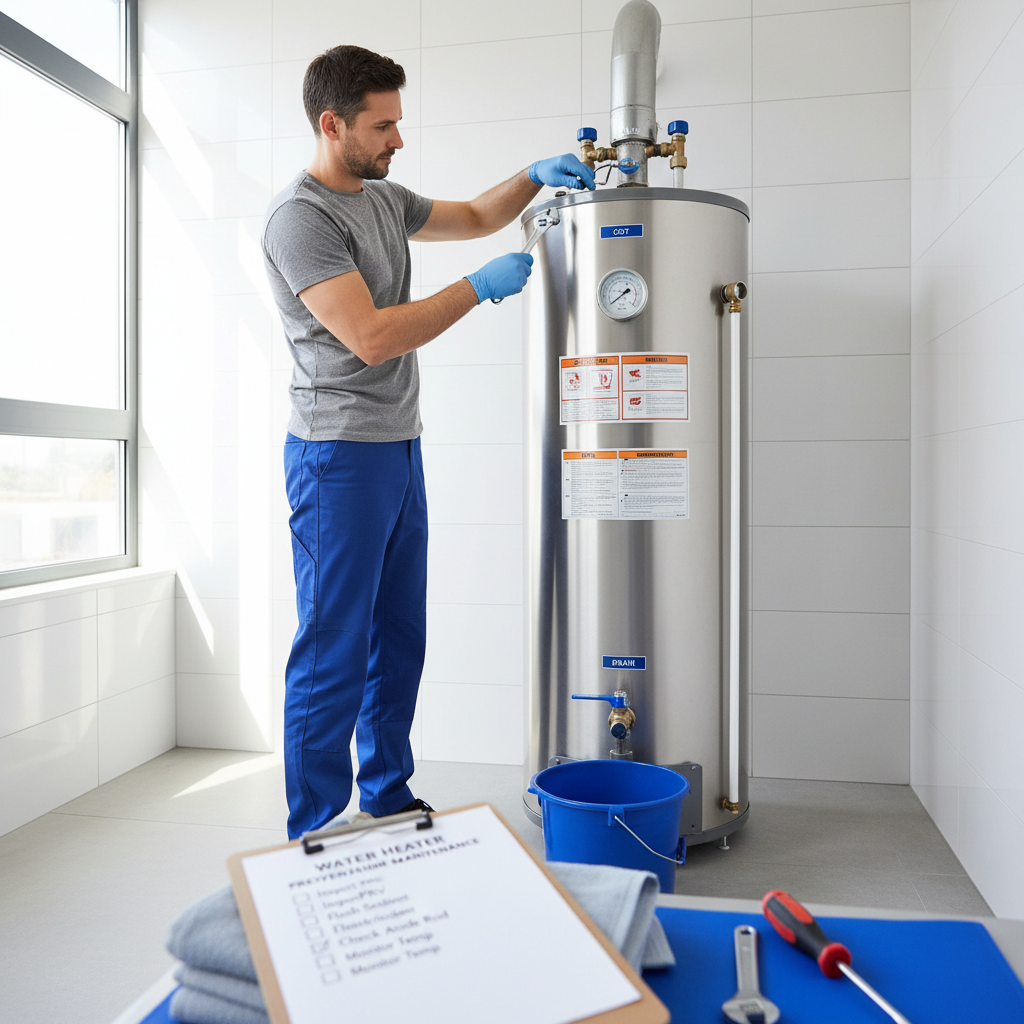
Regular maintenance keeps your water heater running efficiently and extends its lifespan by years. A water heater maintenance checklist should include routine inspections of critical components, sediment flushing, and pressure valve checks that prevent costly repairs and ensure your system operates safely.
-
Drain and flush your water heater tank annually to remove sediment buildup that reduces efficiency and can lead to corrosion or the need for water heater repair.
-
Test the temperature and pressure relief valve yearly by lifting the lever to release a small amount of water, ensuring it's functioning properly to prevent dangerous pressure buildup.
-
Inspect the anode rod every 3 years and replace it when corroded or worn down to less than half its original diameter, protecting your tank from rust.
-
Check for leaks around the tank base, inlet and outlet connections, and the pressure relief valve during your monthly water heater maintenance checklist review.
-
Insulate exposed hot water pipes and wrap an insulation blanket around your tank to reduce heat loss and lower energy consumption.
-
Adjust your water heater temperature to 120°F (49°C) to improve safety, reduce energy costs, and extend the lifespan of your system.
Seasonal Maintenance and Preventative Care Strategies
Check temperature at 120°F and test pressure relief valve. This maintenance prevents costly breakdowns and extends your water heater's lifespan. Test your water heater repair needs early by flushing sediment annually, a critical step that professionals recommend to maintain performance. Monitor the anode rod condition during water heater repair visits, examine all visible connections for leaks, and check insulation on exposed pipes. Schedule professional water heater repair inspections biennially, and note any unusual noises or reduced hot water output. Don't wait for problems, address these items now with water heater repair specialists.
Preparing Your System for Winter Months
A water heater maintenance checklist serves as your roadmap for keeping your system running efficiently and extending its lifespan. Start by draining sediment from the tank annually, checking the pressure relief valve for proper operation, and inspecting the anode rod for corrosion damage. These foundational tasks prevent mineral buildup, reduce energy waste, and catch problems before they become costly repairs.
Summer Efficiency Checks and Adjustments
A comprehensive water heater maintenance checklist guides you through essential tasks that prevent costly repairs and extend your unit's lifespan. Following this checklist systematically, checking the pressure relief valve, inspecting for leaks, flushing sediment buildup, and testing water temperature, ensures your water heater operates safely and efficiently year-round.
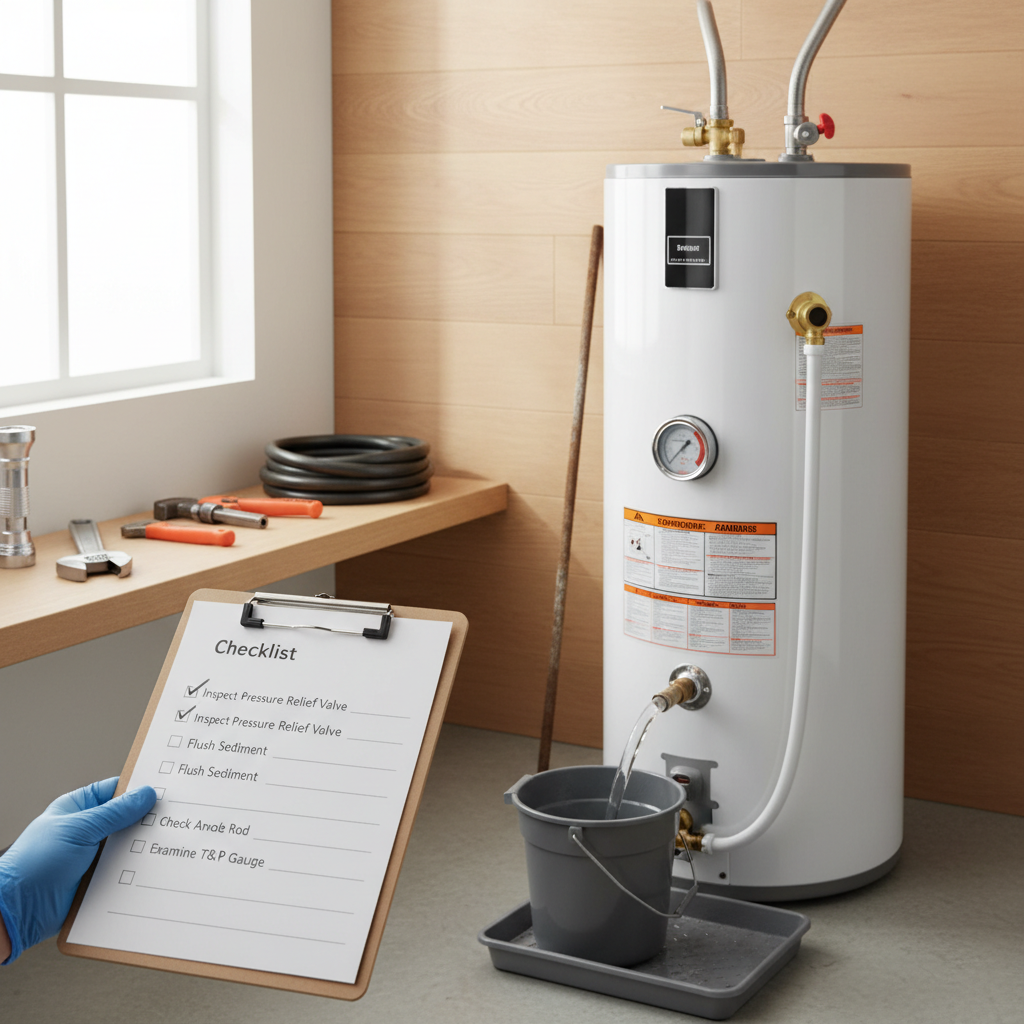
Protect Your Investment With Consistent Maintenance
Staying on top of water heater maintenance isn't just about avoiding unexpected breakdowns, it's an investment in your home's efficiency and comfort. By implementing the key tasks covered in this maintenance checklist, you'll extend your unit's lifespan, reduce energy costs, and catch potential issues before they become expensive repairs. Start with the essentials like flushing sediment and checking the pressure relief valve, then establish a seasonal routine to keep your system running smoothly. Your water heater works hard year-round, so give it the attention it deserves and you'll enjoy reliable hot water for years to come.
Get Hot Water Today
Same-day water heater replacement by licensed, vetted plumbers.
Upfront pricing. No hidden fees. Guaranteed.
Available 24/7 — We answer day or night, weekends & holidays