
Water Heater Installation
By Instant Water Heaters
Table of Contents
Key Takeaways
-
At Instant Water Heaters, we match you with a licensed, pre-vetted plumber in minutes and handle your water heater installation from start to finish, with upfront pricing and no hidden fees.
-
When corrosion finally breaches the tank wall, no repair brings it back, and that is when Instant Water Heaters restores hot water fast.
-
Department of Energy, for homes that use 41 gallons or less of hot water daily, demand water heaters can be 24% to 34% more energy efficient than conventional storage tank water heaters.
-
If that list feels overwhelming beside a leaking tank, that is why Instant Water Heaters exists, matching you with a licensed plumber.
Water Heater Installation: A Homeowner's Guide to Fast, Reliable Hot Water
Water heater installation refers to safely connecting a new hot water heater to a home's plumbing, gas or electric, and venting systems. Because the work depends on fuel type and local codes, it is best handled by a qualified plumbing contractor, and many homeowners choose same-day installation when an old unit fails.
Losing hot water is stressful, especially when a tank leaks or quits without warning. This guide covers choosing the right unit, permits and code requirements, tankless versus storage models, and what a fair, transparent quote should include. Instant Water Heaters connects homeowners with licensed, pre-vetted plumbers to get reliable hot water back fast.
What Causes a Water Heater to Fail?
Water heaters fail because the science inside the tank slowly turns against them. Each tank stores a reservoir of heated water, minerals in that water settle into sediment, and a sacrificial anode rod gradually corrodes so the steel does not. Once these defenses give out, leaks and lukewarm showers follow, which is what pushes many homeowners toward a fresh water heater installation. Why does sediment matter so much? As it blankets the bottom of the tank, it traps heat against the steel and forces the burner or heating element to work harder, stressing the metal and accelerating rust. The anode rod acts like the tank's bodyguard, yet it wears down with everyday use. The Department of Energy lists inspecting the anode rod every three to four years as part of routine upkeep. Hard water, high temperatures, and steady pressure only speed that decline. When corrosion finally breaches the tank wall, no repair brings it back, and that is when Instant Water Heaters restores hot water fast.
What Tools and Materials Do You Need?
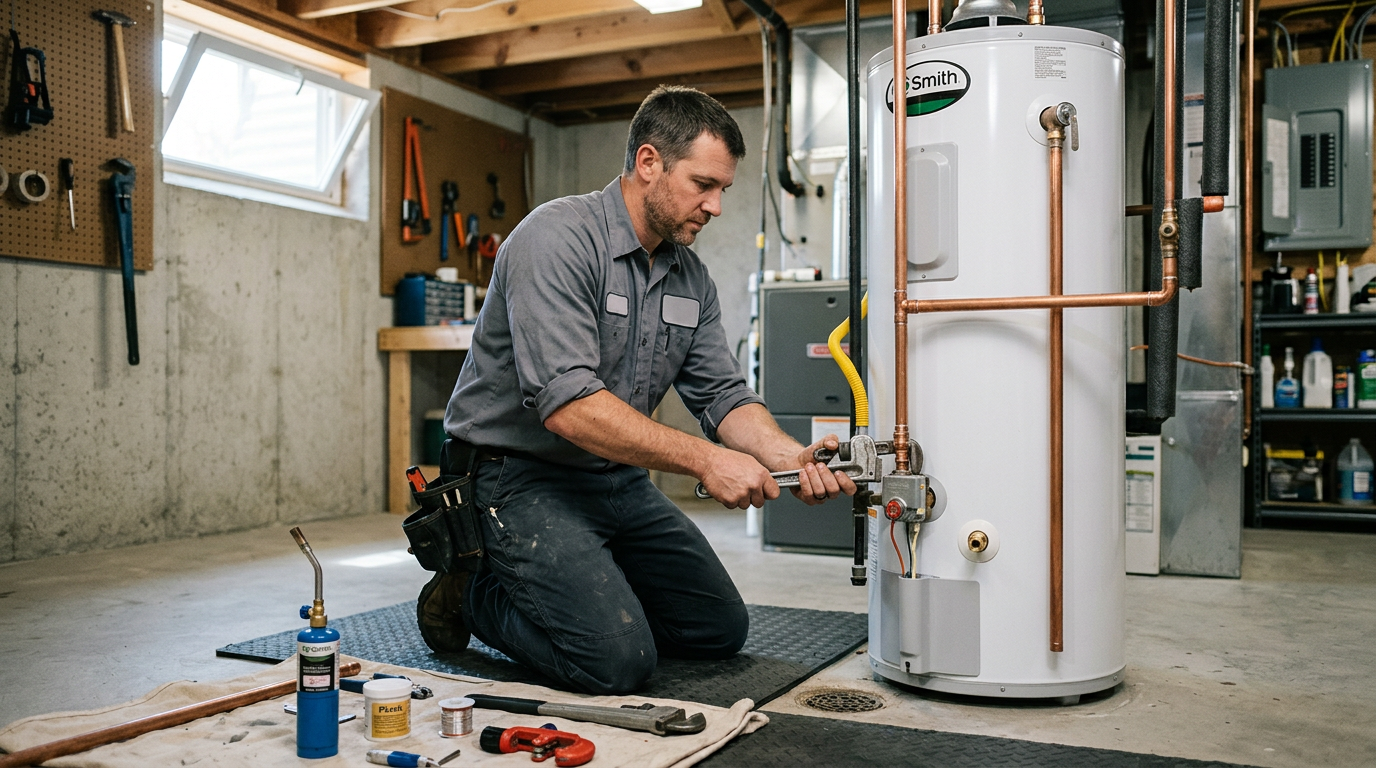
Gather every tool and material before a water heater installation begins, because one missing fitting stalls the job and leaves you without hot water.
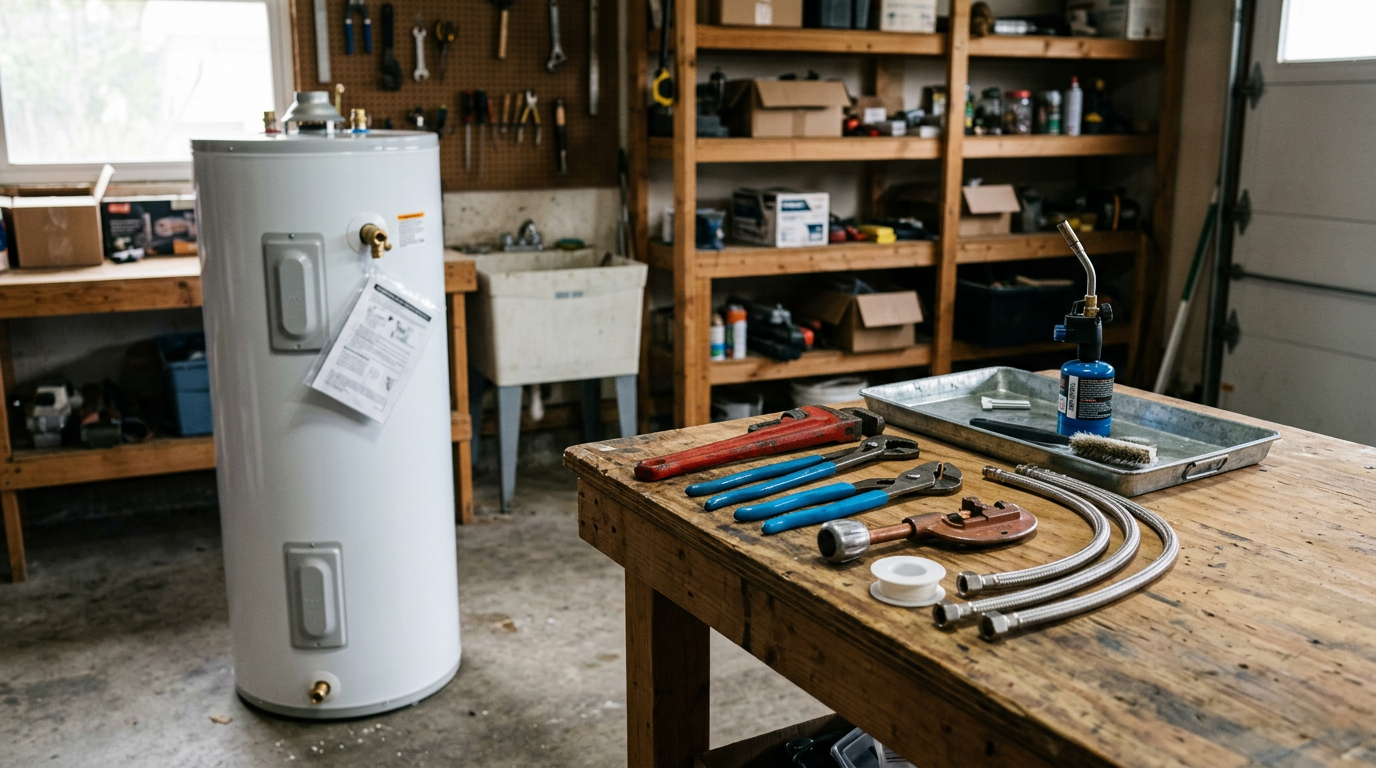
Start with hand tools: a pipe wrench, channel-lock pliers, a tubing cutter or hacksaw, an adjustable wrench, a screwdriver set, and a voltage tester for electric units. Add a garden hose, bucket, and shop vacuum for draining.
For connections, line up flexible supply lines, a new temperature and pressure relief valve, dielectric or push-fit unions, plumber's tape, pipe-joint compound, and a drain pan. Gas models add a flex gas connector and leak-detection solution; electric models need properly rated wire.
Do not forget a level, tape measure, fire-resistant cloth for soldering, and an expansion tank if code requires one. If that list feels overwhelming beside a leaking tank, that is why Instant Water Heaters exists, matching you with a licensed plumber. Knowing what a proper water heater installation requires helps you ask better questions.
What Should You Confirm Before You Start?
Confirm three things before touching a fitting: the water shutoff, the gas or electrical disconnect, and a working temperature and pressure relief valve. The replacement tank's capacity should fit your household; a 50 to 60 gallon unit suits one or two people.
Rule of Thumb: Clear the Space and Set It Safe
-
Leave a working space at least 30 inches deep and 30 inches wide.
-
Use a drain pan at least 1.5 inches deep with a 3/4 inch drain.
-
Keep the thermostat at 120 degrees Fahrenheit for comfort and scald safety.
|
Pre-Install Item |
Code or Spec Figure |
Confirm Before Delivery |
|---|---|---|
|
Storage tank capacity |
50 to 60 gallons serves 1 to 2 people; 80 gallons serves 3 to 4, per Department of Energy guidance |
Peak hour demand |
|
Temperature and pressure relief valve |
Set to open at no more than 210 degrees F, per a code compliance brief |
Install new, never reuse |
|
Drain pan and drain line |
Pan at least 1.5 inches deep with a 3/4 inch indirect waste drain (IRC pan requirement) |
Need floor drain or pump |
|
Service clearance |
Level space at least 30 inches deep by 30 inches wide (service clearance rule) |
Clear before delivery |
|
Efficiency rating |
First hour rating of at least 45 gallons per hour under ENERGY STAR criteria |
Match to use |
|
Thermostat setting |
Set to 120 degrees F for most homes |
Adjust after install |
What Happens During a Water Heater Installation?
Installing a water heater follows a clear sequence. A licensed plumber first cuts the power or gas and shuts the cold water supply, then drains and disconnects the old tank, sets and levels the new unit, reconnects the water, gas or electrical, and venting, and finally refills, tests, and sets the temperature. Why does the order matter? Water, gas, and electricity are unforgiving out of sequence, which is why a proper water heater installation is methodical, not rushed. The U.S. Department of Energy recommends most household water heaters be set to 120 degrees Fahrenheit. That target balances comfort, efficiency, and scald safety. At Instant Water Heaters, we connect homeowners across St. Louis, Chesterfield, and Kirkwood, MO with pre-vetted, licensed plumbers who handle every step, so you get matched in minutes with transparent pricing and no hidden fees.
How Do You Safely Remove the Old Tank?
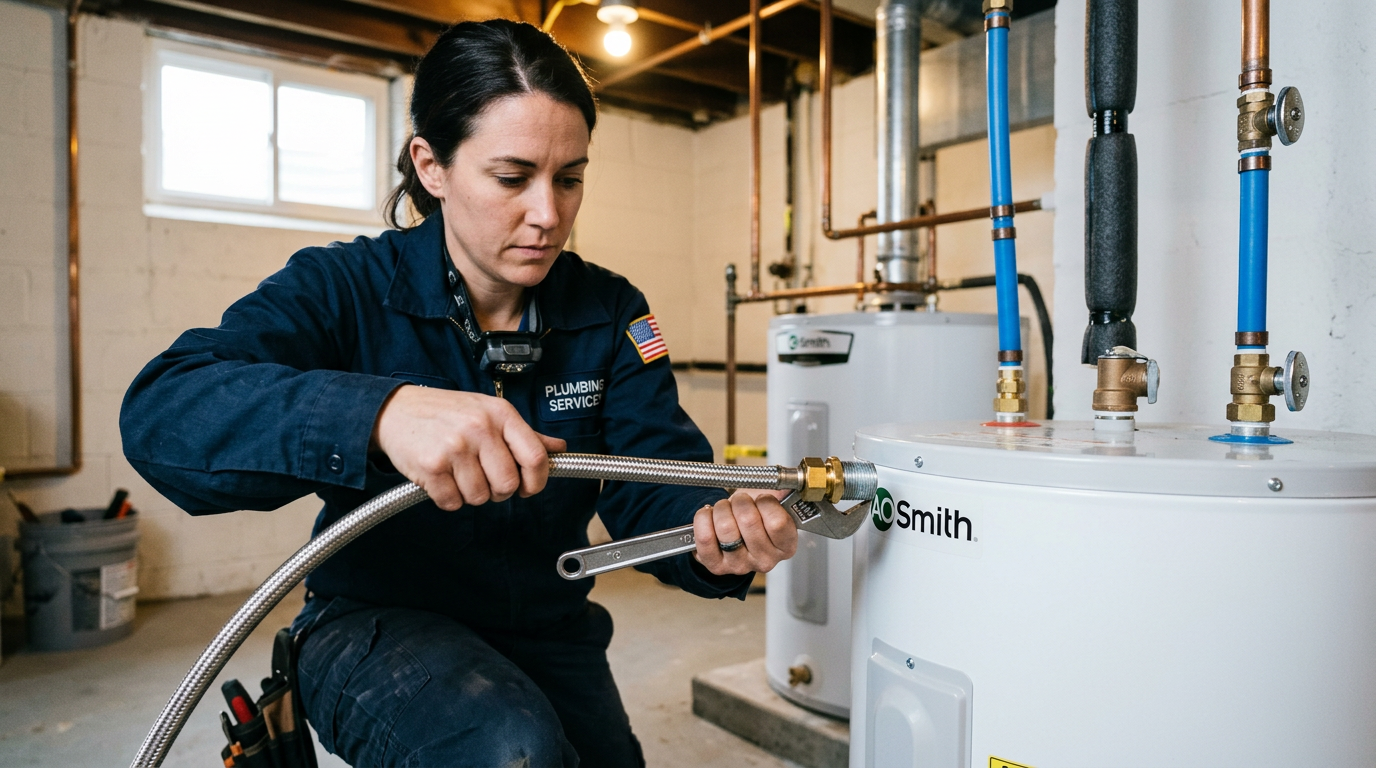
Start by cutting the power: switch off the breaker for an electric unit or turn the gas control to off. Next, close the cold water shutoff above the tank. Attach a garden hose to the drain valve, open the valve and a nearby hot tap so the tank empties without a vacuum. Then disconnect the water lines, and the old tank is ready to lift out.
-
Shut off the gas valve or breaker, then close the cold water supply.
-
Connect a hose to the drain valve, open a hot tap, and empty the old tank.
-
Disconnect the lines, supply, and venting, then remove the old unit.
-
Set the new heater in place, level it, and confirm clearances meet code.
-
Reconnect the water, gas or electrical, and venting with new fittings.
-
Open the cold supply, run a hot faucet until water flows, and check for leaks.
-
Relight the burner or flip the breaker, then set the thermostat to 120 degrees Fahrenheit.
Rule of Thumb: Leave Gas and Code to a Pro
-
Gas, electrical, and venting connections must meet local code, so confirm your installer is licensed and insured.
-
Have the plumber set the new unit to 120 degrees Fahrenheit and confirm no leaks before leaving.
-
120°F – Setting the U.S. Department of Energy suggests for most homes
-
$36 to $61 – Yearly standby loss at 140°F, per the U.S. Department of Energy
-
140°F – Temperature the U.S. Department of Energy flags as a scald risk
-
24/7 – When Instant Water Heaters can match you with a plumber
Which Water Heater Installation Mistakes Should You Avoid?
Avoid these water heater installation mistakes by hiring a licensed professional, pulling the correct permit, and sizing the unit properly before work begins. Most failures trace back to rushed decisions: skipped inspections, mismatched fuel type, or an unvetted handyman cutting corners on safety and code.
A common error is treating a new water heater installation as a simple swap. Gas connections and venting carry real risk, and a poorly vented gas unit can leak carbon monoxide into your home. Skipping the relief valve, drain pan, or expansion tank removes key protection against overpressure. Homeowners also pick the wrong size, leaving too little hot water or wasted energy.
Permits matter more than people expect. The U.S. Department of Energy advises that it is best to have a qualified plumbing and heating contractor install your storage water heater. Skipping that step can void warranties and fail inspection.
The simplest fix is to lean on vetted experts. That is where Instant Water Heaters helps, getting you matched with a licensed plumber who handles permits, sizing, venting, and code, fast.
Should You Hire a Licensed Pro?
Hire a licensed, insured professional, because installation is the biggest factor in whether your system runs safely for years. A vetted plumber sizes the unit correctly, secures the permit, vents gas models properly, and tests every safety component. Cutting this corner to save money often backfires, causing leaks, failed inspections, voided warranties, or carbon monoxide exposure.
-
Skipping the permit and inspection: a permit keeps your water heater installation legal and safe, so confirm your installer files it.
-
Hiring an unlicensed installer: verify the plumber is licensed and insured before work starts.
-
Choosing the wrong size: an undersized tank runs out of hot water, while an oversized one wastes energy.
-
Mishandling gas and venting: improper venting can release carbon monoxide, so leave it to a pro.
-
Forgetting safety parts: confirm the relief valve, drain pan, and shutoff are tested before sign-off.
What If Your Water Heater Installation Fails?
Spot a problem during a water heater installation and act fast. Shut off the water supply and the power or gas, snap a few photos of what you see, and call your installer before you touch anything else. Most hiccups, a drip at a fitting, a pilot that won't stay lit, or lukewarm output, are fixable on the spot when a trained pro is standing there. That is exactly why who does the job matters. The U.S. Department of Energy advises that it's best to have a qualified plumbing and heating contractor install your storage water heater. When a licensed, insured plumber handles your water heater installation, the troubleshooting becomes their responsibility, not yours. Document anything that looks off, keep your warranty paperwork within reach, and never sign off while hot water is still missing. If something feels wrong after the crew packs up, contact Instant Water Heaters and we'll get a vetted plumber back to your door fast.
How Do You Stop a Leak Fast?
Notice water pooling near the base or dripping from a connection? Close the cold water shutoff valve above the unit first, then kill the power or gas. A loose fitting or an unseated temperature and pressure relief valve is a common culprit on a fresh install. Wipe the area dry, mark where the moisture returns, and have your plumber re-seal or replace the part. Never ignore a leak: standing water can damage flooring and signal a bigger pressure problem.
Why Is There No Hot Water?
No hot water after a new setup usually points to a simple cause. On gas units, confirm the pilot or igniter lit and the gas valve is fully open. On electric models, check that the breaker is on and the upper thermostat is set, since the unit ships cold and needs time to heat. Give a tank an hour before judging it. Still cold? That points to a wiring, thermostat, or connection error your installer should correct before leaving.
Ready to Restore Your Hot Water?
When your heater quits, you need hot water back fast, not a week of phone tag. At Instant Water Heaters, we match you with a licensed, pre-vetted plumber in minutes and handle your water heater installation from start to finish, with upfront pricing and no hidden fees. Reach out through our contact page and we'll get your hot water flowing again.