
Water Heater Installation
By Instant Water Heaters
Table of Contents
Key Takeaways
- This guide from Instant Water Heaters walks you through choosing a system, costs, permits, and finding licensed help, including fast same-day installation when a replacement cannot wait.
- Department of Energy reports that most tankless water heaters have a life expectancy of more than 20 years, often making them a strong long term investment despite a typically higher upfront cost.
- Services like Instant Water Heaters connect you with pre vetted local plumbers so you can get reliable water heater installation without the guesswork.
- Heat pump water heaters pull warmth from the surrounding air, so manufacturers commonly recommend roughly 750 cubic feet of air around the unit, plus a route for condensate to a drain or condensate pump.
Water Heater Installation: How to Restore Your Hot Water Fast
Water heater installation is the professional process of removing an old unit and connecting a new storage or tankless heater to a home's water, gas, electrical, and venting lines. Correct sizing and a code-compliant setup ensure the system delivers reliable hot water safely and meets local building requirements.
A failing heater rarely picks a convenient moment, so when cold showers hit, you want a clear plan and a trusted pro. The right unit should provide energy-efficient hot water sized to your household. This guide from Instant Water Heaters walks you through choosing a system, costs, permits, and finding licensed help, including fast same-day installation when a replacement cannot wait.
What Causes a Water Heater to Fail?
Water heaters fail because heat, minerals, and metal quietly work against each other every day, long before a water heater installation is ever scheduled. As your tank heats hard water, dissolved calcium and magnesium settle into a thick sediment layer, while a sacrificial anode rod slowly corrodes to shield the steel tank. Over the years, both defenses wear down. Sediment then forms an insulating crust on the bottom of the tank, so the burner or heating element runs longer, overheats, and rumbles. According to ENERGY STAR, aging and poor maintenance can cause sediment to build up inside the tank and reduce its capacity. Once the anode rod is spent, the bare steel begins rusting from the inside, and a slow leak soon follows. At that point, a fresh water heater installation usually makes more sense than another repair. Staying ahead with timely same-day water heater replacement and a regular maintenance routine protects your comfort, and Instant Water Heaters helps you act fast.
What Tools and Materials Do You Need?
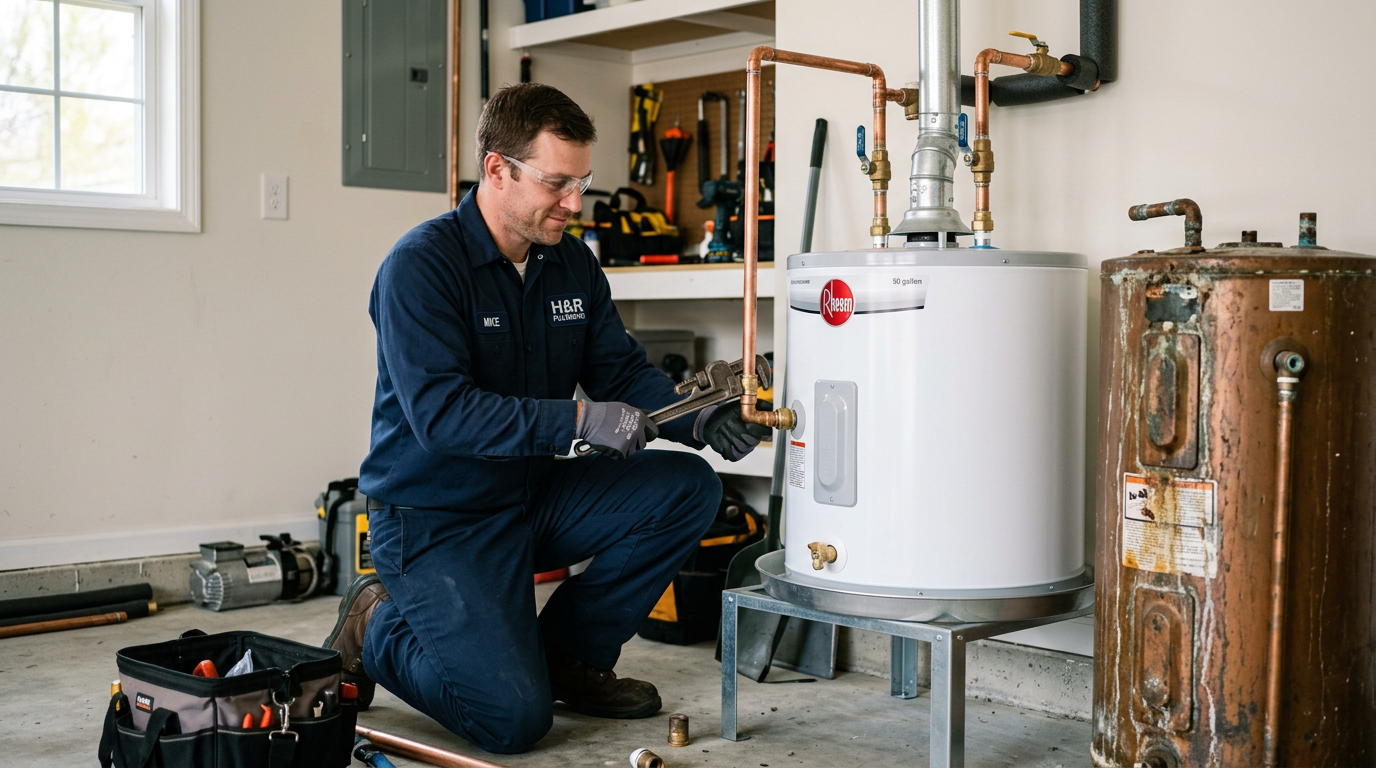
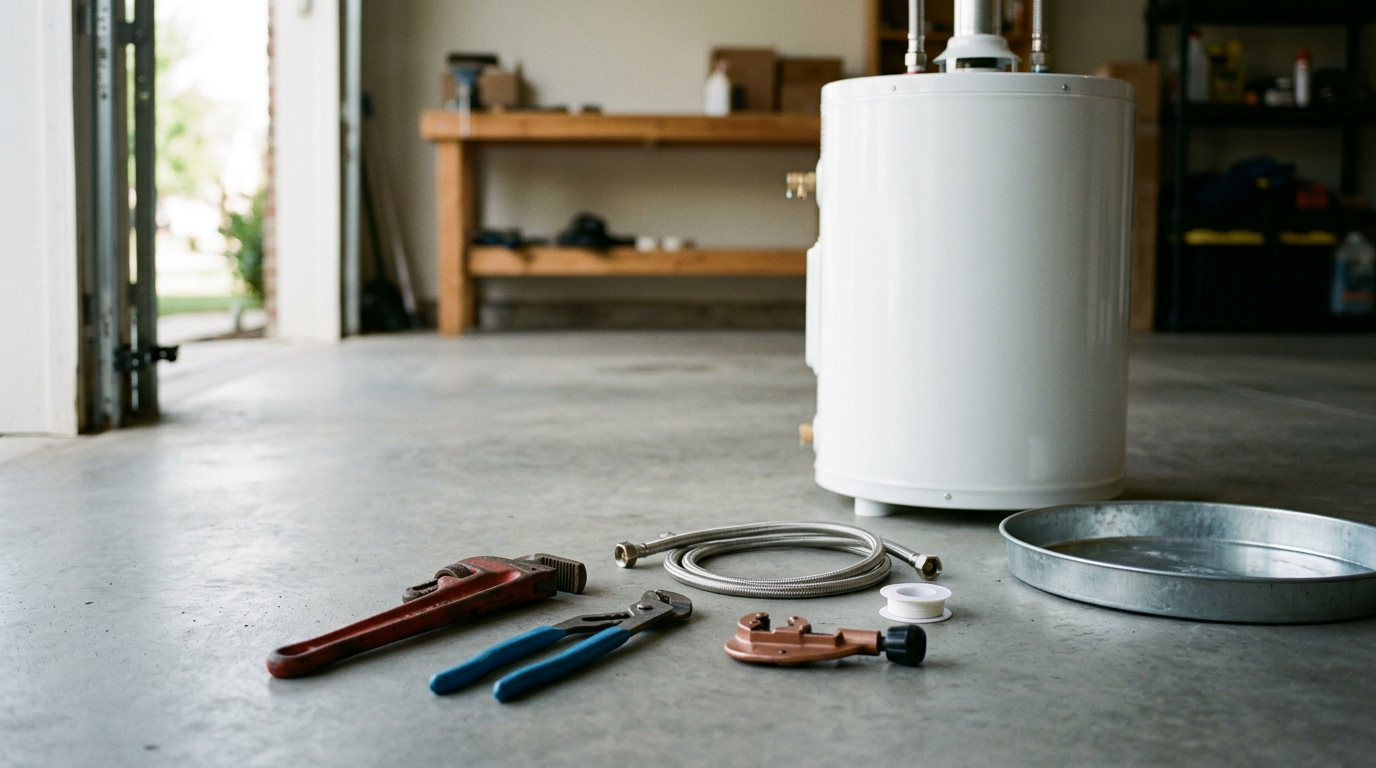
Gather every tool and material before any water heater installation begins, and the project moves faster with far fewer surprises. At minimum, plan for a correctly sized unit, shut-off and supply fittings, fresh flexible water connectors, a drain pan, a temperature and pressure relief valve, pipe-thread tape, and the venting or electrical supply that matches your fuel type. Having these staged turns a stressful swap into a smooth one.
Why does preparation matter so much? A leaking tank rarely waits for a convenient moment, so the homeowners who recover hot water quickest are usually the ones who confirmed their parts list first. Measure the space, note your existing connections, and decide whether you are keeping the same fuel source or switching. If you are weighing a professional water heater replacement, this is also the moment to choose between a storage tank, a tankless model, or a heat pump unit, because each one carries different hookup and clearance needs.
Do not overlook the small consumables. Proper connectors, a discharge pipe for the relief valve, and a pan that fits your unit all guard against future water damage. Knowing the early signs of a leaking tank helps you catch problems before they spread. For most households, the safest path is to let a licensed plumber handle the actual water heater installation, since they arrive with the specialized tools, code knowledge, and replacement valves already in the truck. Instant Water Heaters connects you with vetted local pros, so you can schedule a same-day replacement without chasing quotes.
Which Tools Should You Stage First?
Stage your core hand tools first: a pipe wrench, channel-lock pliers, a tubing cutter, an adjustable wrench, and a screwdriver set handle most connections. Add pipe-thread tape, a garden hose for draining, a bucket, and a voltage tester or igniter for your fuel type. For a tankless model, keep the mounting hardware and venting kit ready. Confirm you have the new relief valve and connectors before you cut into any line.
Planning a Heat Pump Model? Check the Air Space
- Heat pump water heaters pull warmth from the surrounding air, so manufacturers commonly recommend roughly 750 cubic feet of air around the unit, plus a route for condensate to a drain or condensate pump.
- A cramped closet usually will not work, so confirm the location before your water heater installation day to avoid last-minute changes.
|
Water Heater Type |
Hookup & Space Requirement |
Source-Backed Spec |
|---|---|---|
|
Conventional storage tank |
Reuses standard cold and hot connections; needs floor space and a drain pan |
DOE defines gas storage units at 75,000 Btu per hour input or less and electric units at 12 kilowatts or less |
|
Tankless or demand |
Wall-mounted with no storage tank; needs a matched gas line or electrical capacity and venting |
Gas tankless units are defined up to 200,000 Btu per hour input, and they are sized by flow rate such as a shower head near 2.5 gallons per minute |
|
Heat pump (hybrid) |
Needs open surrounding air plus a condensate drain or condensate pump |
Manufacturers commonly recommend 750 cubic feet of air, typically operating at 45 to 60 decibels |
What Are the Water Heater Installation Steps?
A water heater installation follows a clear sequence: shut off power and water, drain and disconnect the old tank, set the new unit in place, reconnect the lines and venting, then fill, test, and set the temperature. Every step protects your safety and the unit's performance. Skipping a stage, like failing to purge air before powering up, can damage a brand-new heater or void its warranty. A final step is dialing in the thermostat; the U.S. Department of Energy notes that most households only require a water heater setting of 120 degrees Fahrenheit. A lower setting like this also helps limit scalding risk. This is where professional help pays off. At Instant Water Heaters, a licensed plumber handles every connection to code, and our network serves homeowners across St. Louis, Chesterfield, and Kirkwood, MO. Rather than risk a botched water heater installation, why not let a vetted expert restore your hot water the same day?
Why Does the Final Leak Check Matter?
Checking for leaks seals the entire job. After the tank fills and power returns, a plumber inspects every connection, the hot and cold fittings, the relief valve, and the drain, watching for drips or moisture. Catching a loose joint now prevents water damage later. A professional also confirms the relief valve discharges correctly and that venting draws properly, so your system runs safely from day one.
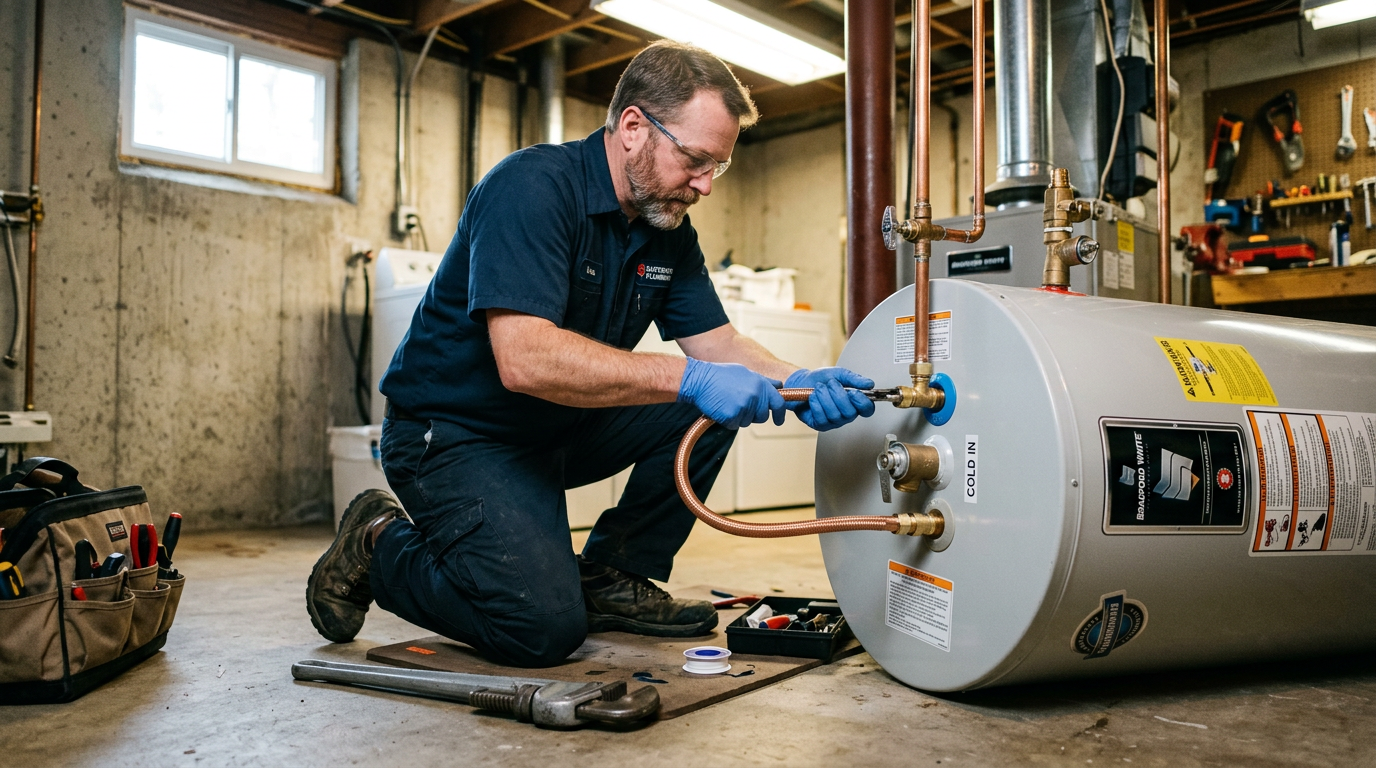
- Shut off the power supply and close the cold water valve before touching any connections.
- Drain the old tank fully through a hose on the drain valve, then disconnect the lines and venting.
- Remove the old unit and set the new heater on a level surface or drain pan.
- Reconnect the hot and cold lines, the temperature and pressure relief valve, and the gas or electrical hookups.
- Reattach venting on combustion models and confirm a proper seal for safe exhaust.
- Open the cold supply, fill the tank, and purge trapped air through a nearby hot faucet.
- Restore power or relight the burner, then inspect every joint for leaks.
- Set the thermostat near 120 degrees Fahrenheit and confirm hot water reaches your taps.
Why a Licensed Pro Matters
- Gas connections, venting, and code compliance carry real safety risks, so water heater installation is rarely a true DIY job.
- A licensed, insured plumber from Instant Water Heaters handles permits, hookups, and testing, then backs the work with manufacturer and workmanship warranties.
- 120°F – Water heater setting most households need, per the U.S. Department of Energy
- 8 steps – Core stages in a standard professional water heater installation
- 24/7 – Year-round scheduling and support from Instant Water Heaters
- Same day – Typical timeline to restore hot water with a vetted local plumber
Which Water Heater Installation Mistakes Cost Most?
Sidestep the most common water heater installation mistakes by sizing the unit correctly, pulling the right permits, and leaving gas and electrical work to a licensed plumber. Rushing the swap, skipping the temperature and pressure relief valve, or guessing on venting can turn a quick fix into a dangerous, costly repair.
The biggest error? Treating a water heater installation like a simple appliance swap. A tank that is too small leaves your family short on hot water, while an oversized one wastes energy every day. Permits trip up homeowners, too: many St. Louis-area jurisdictions require a permit and inspection, and skipping it can stall a home sale or void a warranty.
Temperature settings matter just as much. The U.S. Department of Energy notes that most households only need their water heater set around 120 degrees, a setting that trims energy use and reduces scald risk. When a heater fails unexpectedly, our same-day water heater replacement network matches you with a vetted plumber fast, so every detail is done right.
Why Hire a Licensed Professional?
Why does this matter most? Gas lines, venting, and electrical connections leave no room for error. A loose gas fitting or reversed connection can cause leaks, carbon monoxide exposure, or a failed inspection. DIY attempts often miss code requirements that protect your home. Hiring a licensed, insured plumber means the job is done safely, backed by a warranty, and signed off the first time.
- Choosing the wrong size: too small runs out of hot water, too large wastes energy every day.
- Skipping permits and inspections: many local building departments require them, and missing this can stall a home sale.
- Mishandling gas venting: poor venting can let dangerous carbon monoxide build up indoors.
- Reusing worn parts: corroded connectors or a missing expansion tank invite leaks and early failure.
- Forgetting the relief valve discharge line: the temperature and pressure relief valve needs a proper drain to vent safely.
What If Your Water Heater Installation Goes Wrong?
Stay calm and work the problem in order: shut off the power or gas, close the cold water supply valve, and figure out whether you face no hot water, a leak, or odd noises. Most hiccups during a water heater installation trace back to a few fixable causes.
After a fresh install, no hot water often points to an unlit pilot, a tripped breaker, or a thermostat set too low. A puddle near the base usually means a loose inlet or outlet connection, a poor fitting, or a slightly open drain valve. If water feels scalding or barely warm, the temperature dial is the first thing to check. The U.S. Department of Energy notes that most households only require a setting of around 120 degrees Fahrenheit. When a fix sits beyond a simple adjustment, that is your cue to call a licensed plumber rather than risk gas or wiring work yourself. Catching trouble early, as our guide to preventing water heater leaks explains, protects both your floor and your warranty.
How Do You Pinpoint the Real Problem?
Name the exact symptom before you touch anything: no hot water at all, lukewarm water, a visible leak, or a rumbling tank. Each points to a different culprit. Check the simplest causes first: a reset breaker, a relit pilot, or a fully open shut-off valve. Our walkthrough on no hot water fixes covers these quick checks. If the issue survives the basics, write it down and call a pro.
When Should You Call a Licensed Plumber?
Call a licensed plumber the moment you smell gas, see active leaking, or face wiring you are not trained to handle. These are not do-it-yourself territory. A botched water heater installation can void your warranty or create a safety hazard, so professional help pays off fast. Instant Water Heaters connects you with pre-vetted, licensed pros in minutes, and our guide to emergency repair costs helps you budget.
Ready to Restore Your Hot Water?
When your hot water fails, the next step is simple: let us connect you with a licensed, pre-vetted plumber who handles your water heater installation fast. Our team coordinates everything, from matching the right unit to scheduling, with upfront pricing and no hidden fees. Reach out today and we'll get your hot water flowing again.