
Water Heater Anode Replacement: Complete Guide to Extend Tank Life
Water heater anode replacement stands as one of the most overlooked yet critical maintenance tasks for extending your tank's lifespan. This sacrificial component protects your water heater from corrosion by attracting minerals and sediment that would otherwise destroy the steel tank. Most homeowners don't think about their anode rod until rust-colored water appears or the tank develops leaks. Learning when and how to replace anode rod components can save you from a premature $1,500-$3,000 tank replacement. The replacement process itself costs between $150-$300 when handled professionally, making it one of the most cost-effective ways to protect your investment. Understanding the right replacement schedule based on your water quality keeps your system running efficiently for 12-15 years instead of the typical 8-10 years.
When to Schedule Your Water Heater Anode Replacement
“`json
{
"text_content": "This metal rod attracts corrosive elements, degrading itself instead of letting the tank rust. Check it every. Your water heater's anode rod acts as a sacrificial component that protects the tank from corrosion. Regular water heater anode replacement can extend your tank's lifespan by several years, potentially saving you hundreds of dollars on premature replacement costs.
Essential Steps for Successful Replacement
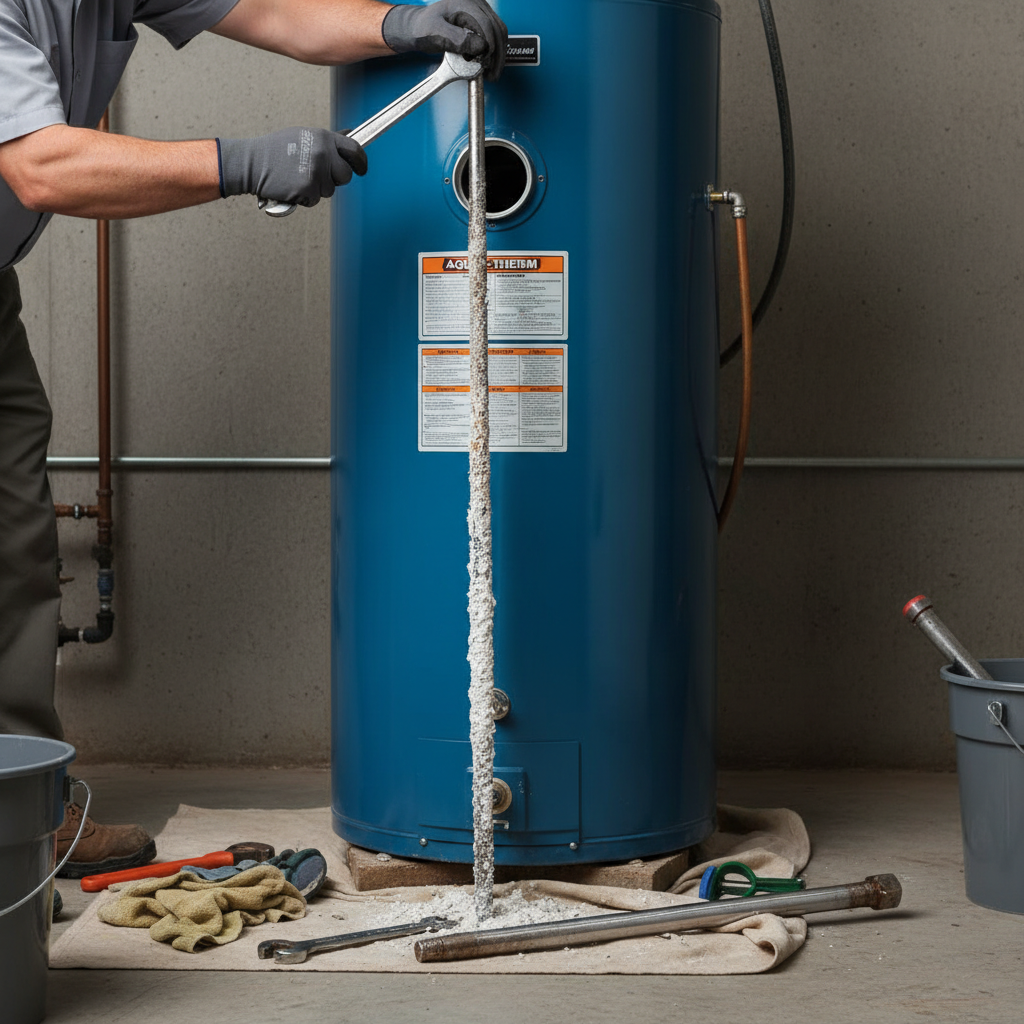
Your water heater's anode rod protects the tank from corrosion. Regular water heater anode replacement extends your unit's lifespan and prevents costly repairs.
-
Check the anode rod every two to three years to catch corrosion early, as this sacrificial component protects the tank from rust. Replacement becomes necessary when more than six inches of the core wire is exposed or the rod is less than half its original diameter.
-
Turn off the power and water supply before starting any replacement work. For electric units, flip the breaker; for gas models, set the control to pilot mode. Allow the tank to cool for at least two hours to prevent burns.
-
Use a 1-1/16 inch socket and breaker bar to loosen stubborn anode rods, which often seize after years of exposure to hot water. Apply penetrating oil the night before and drain a few gallons through the valve to reduce water pressure and simplify removal.
-
Choose between magnesium, aluminum, or powered anodes based on your water chemistry. Magnesium rods work best for standard conditions, aluminum suits hard water areas, and powered anodes eliminate the sulfur smell sometimes caused by traditional rods.
-
Install flexible hex anode rods in tight spaces where standard straight rods won’t fit, particularly in basement installations with limited overhead clearance. These segmented rods bend during installation and straighten once inside the tank.
Cost and Long-Term Benefits of Anode Replacement
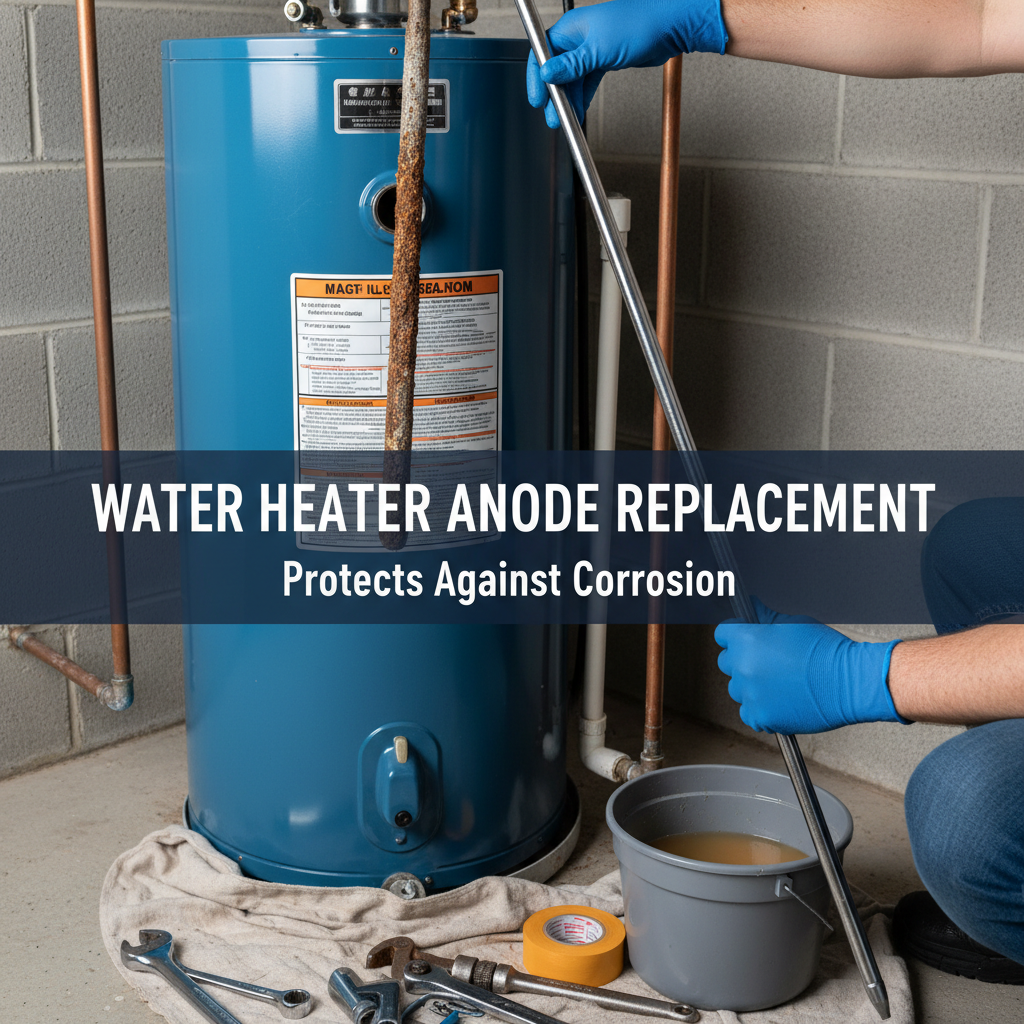
When you ignore water heater anode replacement, rust and sediment build up inside the tank, leading to leaks and premature failure. The anode rod attracts corrosive elements, sacrificing itself to save your tank. Inspect it every 2-3 years and replace when worn to the wire core. Replacing this inexpensive part adds years to your water heater's life. Your water heater's anode rod is a crucial component that protects the tank from corrosion. Most homeowners don't realize this sacrificial metal rod exists, yet it's working constantly to extend your water heater's lifespan.
Protect Your Water Heater Investment Today
Regular water heater anode replacement protects your tank from premature failure and costly emergency repairs. By staying proactive with maintenance schedules and monitoring rod condition, you'll maximize your water heater's lifespan while avoiding unexpected breakdowns. Don't wait until rust appears, schedule professional inspection today to keep your system running efficiently for years to come.
Get Hot Water Today
Same-day water heater replacement by licensed, vetted plumbers.
Upfront pricing. No hidden fees. Guaranteed.
⚡ Available 24/7 — St. Louis Metro Area