
Is a Hot Water Recirculation Pump Worth It?
By Instant Water Heaters
Key Takeaways
- A recirculation pump buys faster hot water at the tap, but the control strategy you pick, not the pump hardware, decides whether the trade-off in electricity use is worth it.
- Weighing the installed price of a pump against the daily wait for hot water at the far tap is the practical way to judge whether the upgrade earns its keep.
What Does a Hot Water Recirculation Pump Do?
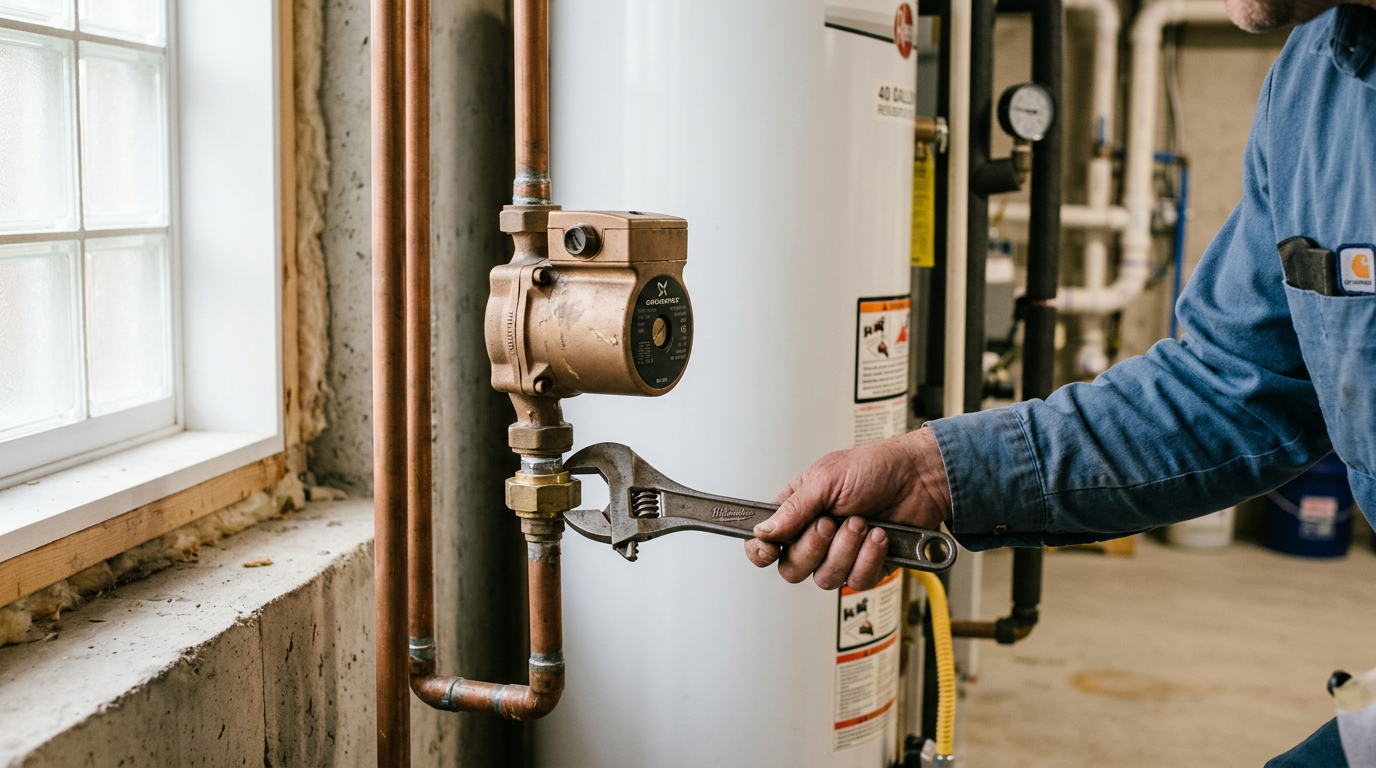
A hot water recirculation pump is a device that moves cooled water out of the hot water supply line and returns it to the water heater for reheating. The pump keeps warm water circulating, so a tap delivers hot water faster. The trade-off is a higher upfront cost and some added energy use.
A recirculation pump changes how hot water travels through your home by keeping warm water moving through the supply line instead of letting it sit and cool. The result is faster hot water at the tap and less water run down the drain while you wait.
That convenience carries real trade-offs. The pump uses electricity whenever it runs, and a loop that stays warm sheds heat through the pipe walls even when nobody is drawing water. Leave a pump running around the clock with no control, and you can raise your water heating costs without gaining much.
Two installation routes dominate. A dedicated return line gives the pump its own path back to the heater and keeps the cold line cold. Homeowners upgrading an older system often pair this work with a tankless water heater installation, because many modern tankless units are built to work with a recirculation loop.
- Faster hot water delivery: the pump returns cooled water to the heater instead of letting it run down the drain while you wait.
- Lower water waste: on-demand control runs the pump only when someone asks for hot water, not around the clock.
- Added electricity use: the pump motor draws power whenever it runs, and a loop that stays warm loses heat between draws.
- Cold-side effect: a crossover valve pushes cooled water into the cold line, so the cold tap at the far sink can run briefly lukewarm.
- Plumbing fit matters: a dedicated return line gives the most consistent delivery, while a crossover valve avoids opening finished walls.
- If you are already planning a tankless installation in Kirkwood, ask whether the unit supports recirculation before you commit.
Match the control to the way you use hot water
- If your household draws hot water at unpredictable times, demand-initiated control is the better fit because the pump runs only when someone calls for it.
- If your mornings follow a fixed schedule, a timer can work, but a pump with no control at all runs continuously and wastes energy.
- Whichever control you choose, ask the installer to confirm the pump iscompatible with your water heater before the work begins.
|
Control or design choice |
How it works |
Documented figure |
Best fit |
|---|---|---|---|
|
Uncontrolled continuous recirculation |
Pump runs around the clock with no control, keeping the loop warm between draws |
Recirculation can increase the energy needed to heat water, per the ETCC circulator pump study |
Seldom worth it, since standby heat loss continues when no hot water is being drawn |
|
Demand-initiated recirculation |
Pump starts only on a button, sensor, or hot-water draw instead of running nonstop |
Stored water is capped at no more than 0.5 gallons between the hot water source and any fixture under EPA Water Sense criteria |
Households that want fast hot water without constant pump run time |
|
Circulating water heater efficiency rules |
Applies to water heaters sold with built-in circulation for recirculation loops |
Circulating water heaters would be subject to storage-type water heater efficiency standards under a U.S. Department of Energy proposal, docket EERE-2017-BT-STD-0019 |
Buyers should expect recirculation-ready heaters to be rated on storage-type efficiency rules |
|
Recirculation line routing |
Branch lines run from the loop to each fixture instead of a long dead end |
Branch lines generally stay within ten feet of the recirculation loop |
Larger or spread-out homes where fixtures sit far from the heater |
What Causes a Recirculation Pump to Fail?
Look past the guesswork: a hot water recirculation pump that stops delivering hot water quickly almost always traces back to a short list of causes. Lukewarm water at the cold tap can mean a failed check valve is letting hot water cross over, and ENERGY STAR notes that recirculation systems that operate continuously have the potential to use more energy.
An aging or leaking heater can drag down the whole loop, and the San Francisco Public Utilities Commission notes that old or leaking water heaters may need repairs or replacement before installing a hot water recirculating pump. That is where Instant Water Heaters helps: a licensed plumber can tell a pump problem from a water heater problem, then line up water heater replacement in Chesterfield or water heater replacement in Kirkwood quickly, with the same service available for replacement in St Louis.
Quick Facts
- About 1,000 gallons – Water a recirculation system can save per person each year, per industry estimates reported by HPAC Engineering
- 25 to 30% – Share of a multifamily building's total energy the recirculation load can reach when oversized pumps run continuously, per HPAC Engineering
- 3 – Ways to activate a demand system: a push button, a timer, or a motion sensor, per ENERGY STAR
Ready to Stop Waiting for Hot Water?
Whether you are adding a recirculation pump or considering a tankless system upgrade, the work is claimed fast, and we handle the coordination from matching to scheduling. Contact Instant Water Heaters to get your hot water project moving. Contact us today.