
How to Flush Sediment From a Tank Water Heater
By Instant Water Heaters
Key Takeaways
- Hardness is measurable and predictable, so homeowners who test their water can set a flushing cadence instead of waiting for rumbling and cold showers to announce the problem for them.
- Because lime and calcium carbonate are less soluble in hot water, they settle out and bake onto the tank floor and lower element, so a heater that once recovered quickly gradually loses capacity and efficiency.
- Test a hot tap against a cold tap first: an odor that shows up only on the hot side points to the anode rod rather than to sediment, so flushing alone will not clear it.
Is Sediment Buildup Why Your Hot Water Runs Out?
Learning how to flush sediment from a water heater matters because that sediment layer insulates the burner or heating element from the water, so the tank runs longer, rumbles, and delivers less hot water before it gives out.
Geological Survey, water is classified as very hard once calcium carbonate levels exceed 180 mg/L. Wisconsin's Madison Metropolitan Sewerage District, a public wastewater authority, notes that scale forms more easily in hot water than in cold water, "and is particularly observed in water heaters and appliances that use hot water." Sediment starts as a thin coating, then thickens into a crust that traps heat, wastes energy, and stresses the tank steel.
A fair number of tanks that rumble today were simply never flushed.
- Annual flush: Roto-Rooter states that water heaters should be drained once a year to flush out sediment, and the same guide recommends the annual task for gas and electric tank models.
- Cleaning cadence for very hard water: municipal water districts treat hardness as a measurable risk, and Madison Metropolitan Sewerage District classifies water above 180 mg/L of calcium carbonate as very hard water.
- When to call a professional instead: Roto-Rooter advises that you let a professional flush the tank if it has not been drained for three or more years, because loosening compacted sediment can expose a failing tank.
- Cost exposure: scale buildup can shorten a tank's service life, so homeowners in hard water are as should plan on a replacement sooner than the advertised tank warranty suggests.
Watch the three quiet signals
- Sediment rarely fails a heater overnight; it announces itself in stages that most homeowners overlook until the hot water is gone.
- Treat rumbling, fluctuating temperature, and shrinking hot water supply as your cue to schedule a flush, not as background noise.
Roto-Rooter also notes that sediment can also clog the unit's pressure relief valve and compromise the heater's safety, which makes this a routine maintenance task rather than a cosmetic one. If you need to flush sediment out of your water heater more than once a year, Roto-Rooter says to contact a professional plumber for assistance.
The comparison below pairs each maintenance approach with the documented interval, the measured performance impact, and the authority behind it.
|
Maintenance Approach |
Documented Interval |
Measured Effect or Classification |
Source Note |
|---|---|---|---|
|
Annual tank drain-and-flush |
Once per year |
Flushes out sediment that reduces the unit's efficiency and can damage internal components |
|
|
Very hard water classification |
Above 180 mg/L (10.5 gpg) Ca CO3 |
Scale forms more readily in hot water and is particularly observed in water heaters |
|
|
Soft water classification |
0 to 60 mg/L Ca CO3 |
Lowest category on the USGS hardness scale |
|
|
Gas storage heater with 60 lb (27 kg) of scale |
About 20 years of equivalent buildup |
Gas unit efficiency declined about 5%; electric units held steady but elements failed periodically |
What Causes Sediment Buildup in a Water Heater?
## What Causes Sediment Buildup in a Water Heater?
Recognize the warning signs early, because the damage happens quietly. Minerals dissolved in your water settle to the bottom of the tank as they heat, and that layer keeps growing. Those are the moments when learning how to flush sediment from a water heater stops being a maintenance task and becomes a decision: keep patching the unit or plan a replacement before it fails completely.
If your heater is already failing on both counts, weighing water heater replacement in St Louis options early keeps the job on your schedule instead of an emergency one.
For homeowners in Kirkwood and across St Louis and Chesterfield, we can have a qualified professional out to inspect the tank, confirm whether sediment or failing components are the cause, and handle the repair or replacement.
Quick Facts
- Every 3 to 6 months – Drain interval for tank-style heaters
- 14% to 18% – Share of a typical utility bill spent heating water
- 120 degrees F – Optimum tank temperature for efficiency and function
- Past 10 years old – When to start shopping for a replacement
- 10 to 15 years – Typical service life of a water heater
According to University of Nebraska Extension, "Bacteria that feed on sulfur can produce hydrogen sulfide gas which is the primary offender when it comes to odor," and the same agency notes the odor can come from a hot water heater when the magnesium corrosion control rod reacts with sulfates in the water.
Nebraska Extension classifies sulfate and hydrogen sulfide as nuisance contaminants that "do not pose serious risks to human health." Still, the agency warns that elevated levels may corrode plumbing.
As the National Board of Boiler and Pressure Vessel Inspectors puts it, "When water is heated, calcium carbonate settles to the bottom of the tank," and that sediment "reduces the efficiency of your water heater, as well as its storage capacity and eventually its lifespan."
The practical result is a tank that works harder to heat less water, so you pay more for slower recovery and a shorter service life.
The National Board recommends draining water from your tank "two to four times a year (more often if you live in a hard-water area)," far more often than the once-a-year advice online.
Homeowners in older suburbs like Ellisville or Ballwin often sit on harder water and benefit from the shorter cycle.
## Step-by-Step: How to Flush Sediment From a Water Heater
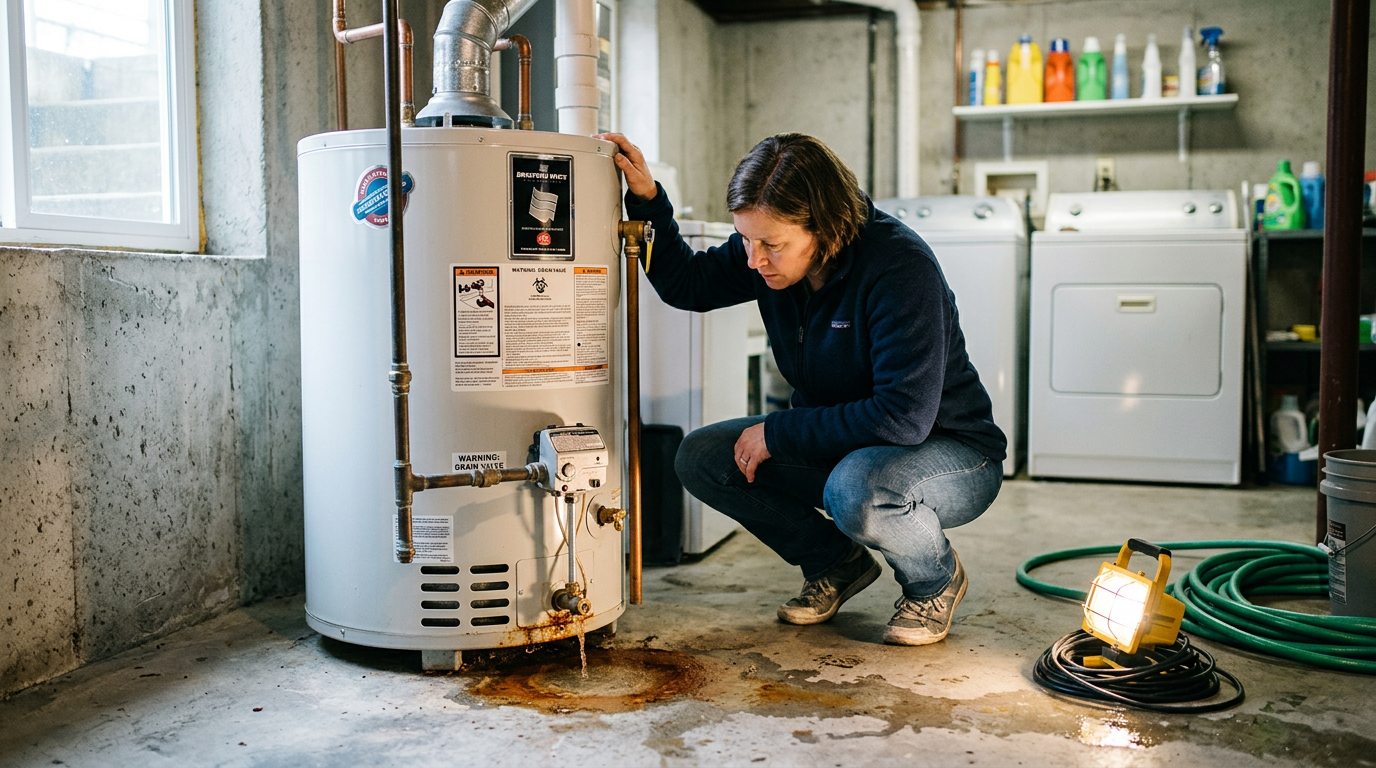
Workthrough the steps in order, and stop if anything feels wrong. Attach a garden hose to the drain valve and run the other end to a floor drain, bucket, or safe outdoor spot, per the National Board's instruction to "attach a length of garden hose to the drain valve near the bottom of the tank and empty several gallons into a floor drain or bucket."
5. Sediment sometimes seals pinhole leaks, and opening the valve for the first time can start a leak that only water heater replacement solves.
A drain valve that drips after you close it usually just has grit in the seat: the National Board advises that " Opening and closing the valve a few times will usually flush the sediment out of the valve."
A returning rotten egg smell is a different repair. When sediment, a failing anode, and an aging tank converge, the flushing job becomes a replacement conversation, so have a trusted plumber inspect the system before small faults become a flooded floor.
Get Professional Help Today
Visit our contact page to get matched with a pre-vetted local pro.