
Rinnai Tankless Water Heater Installation: Complete Professional Guide
Rinnai tankless water heater installation transforms your home's hot water system by delivering endless on-demand heating while reducing energy consumption by up to 40% compared to traditional tanks. Understanding the installation requirements ensures you'll maximize efficiency, meet code compliance, and avoid costly mistakes during setup.
Understanding Rinnai Tankless Water Heater Installation Requirements
Rinnai tankless water heaters require professional installation with upgraded gas lines, proper venting, and electrical circuits. Licensed installers need 6-10 hours to complete permits, code compliance, and manufacturer-certified work to maintain warranty coverage. Rinnai tankless water heater installation transforms how you receive hot water in your home, delivering an endless supply on demand while reducing energy consumption by up to 30% compared to traditional storage tanks. Your home's existing infrastructure determines whether you'll need a natural gas installation or an electric alternative, with gas models typically requiring 120,000 BTU capacity and dedicated exhaust systems.
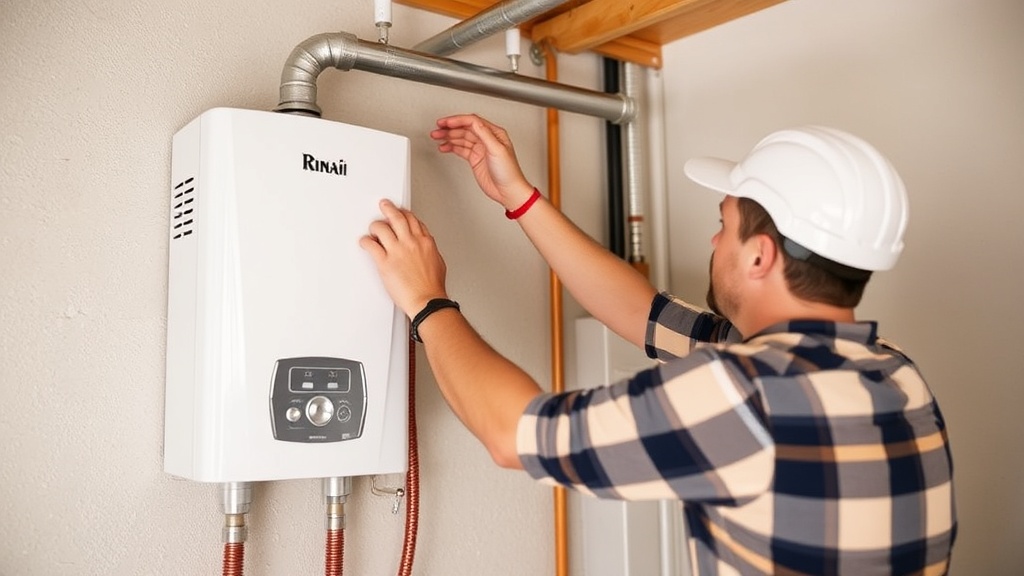
What Does Professional Installation Include?
Installing a Rinnai tankless water heater requires careful attention to several critical factors that ensure optimal performance and longevity. You'll discover essential preparation steps, compliance requirements, and professional considerations that make the difference between a successful installation and costly mistakes down the road.
-
Professional installation by a licensed plumber is essential for Rinnai tankless water heater installation because these units require precise gas line sizing, electrical upgrades, and proper venting to meet local building codes. DIY installations often void warranties and create safety hazards that can cost thousands to remedy.
-
You'll need to verify your home meets specific installation requirements before purchasing a Rinnai unit, including adequate gas supply (typically 199,000 BTU minimum for whole-house models), proper electrical capacity for the control panel, and sufficient clearance for venting to the exterior.
-
Rinnai models require dedicated venting systems that differ from traditional tank heaters, with concentric or PVC venting running to an exterior wall. Your installer must follow exact venting specifications to prevent carbon monoxide buildup and ensure optimal combustion efficiency.
-
Expect your installation to include water line modifications, gas line upgrades, condensate drain installation, and potential electrical panel upgrades. Most professional installations take 6-8 hours to complete, depending on your home's existing infrastructure and the complexity of routing gas lines.
-
Permits are mandatory for Rinnai tankless water heater installation in most jurisdictions, covering gas work, electrical connections, and plumbing modifications. Your licensed installer will typically handle permit applications and coordinate required inspections to ensure code compliance.
Installation Costs and Choosing the Right Contractor
The process starts with sizing your unit. Installing a Rinnai tankless water heater requires careful planning and adherence to manufacturer specifications to ensure optimal performance and safety. Understanding tankless installation costs upfront helps you budget for these infrastructure upgrades.

Ready to Upgrade to a Rinnai System?
Ready to experience endless hot water and lower energy bills? Professional rinnai tankless water tankless water heater installation ensures your system operates safely and efficiently for decades. Review the installation requirements before scheduling your upgrade, and consult Rinnai's official documentation for model-specific specifications that match your home's needs.
Get Hot Water Today
Same-day water heater replacement by licensed, vetted plumbers.
Upfront pricing. No hidden fees. Guaranteed.
⚡ Available 24/7 — St. Louis Metro Area