
What Is the Average Water Heater Replacement Cost in 2026?
The equipment usually ranges from $1,300 to $3,500 including professional installation fees. This guide explores how labor rates, regional demand, and updated energy efficiency standards impact your final bill. You will learn about gas installation costs for modern units and why high efficiency models might save you more money over the next decade.
Breaking Down the Average Water Heater Replacement Cost
The average water heater replacement cost hits $2,100 for standard tanks. High-efficiency upgrades or pipe reconfigurations often push your total investment beyond $4,500. Navigating the it in 2026 requires understanding that most homeowners spend between $1,400 and $3,200 for a standard installation.
National Cost Averages in 2026
Labor and technical expertise usually account for 40% to 50% of the total bill. A professional install includes the physical unit, new flexible connectors, and a thermal expansion tank which is now a standard requirement in most jurisdictions. You might also encounter gas installation costs if your venting system needs to be brought up to current 2026 safety codes during the process.
What's Included in Replacement Pricing
Hidden expenses like municipal permits and old unit disposal can add $150 to $500 to the average cost of water heater replacement. Retailers often advertise a low price for the unit alone, but this excludes the necessary plumbing permits and the hauling away of your heavy, rusted tank. Professional installers bundle these essential services to ensure your home remains compliant with local building regulations.
Cost Breakdown by Water Heater Type
Traditional tanks stay popular due to low upfront prices. In 2026, the average cost of water heater replacement starts near $850 for 30-gallon units, while high-demand 80-gallon models can exceed $2,600 installed. If your current system is failing, you might also need to replace heating elements or address sediment buildup that has shortened the life of the appliance.
Tank vs Tankless Pricing Comparison
Tankless systems cost more upfront but offer long-term savings. Professional 2026 installs range from $2,800 to $5,500. This higher price often covers necessary gas line upgrades or electrical circuit modifications. Most homeowners find that gas installation costs for tankless models are higher due to complex venting requirements.
Gas vs Electric Installation Costs
Electric units are usually $200 to $500 cheaper upfront than gas ones. Switching sources adds $1,500 to $3,000 to the average cost of water heater replacement due to new gas lines or wiring requirements. According to data from the Department of Energy, operational costs vary by region.

Individual project totals fluctuate based on specific home requirements and local labor standards. Your final bill will typically include the following primary expense categories during a mehlville heater s visit or a national contractor consultation.
-
Select the right fuel source to manage your upfront investment, as costs vary significantly between electricity and gas units. While electric models often cost less initially, you should weigh long-term savings against current gas installation costs to determine which system best fits your budget over the next decade.
-
Evaluate the tank size requirements for your household to avoid overspending on unused capacity. A standard 40- to 50-gallon tank typically covers the average water heater replacement cost for most families, providing a balanced mix of performance and affordability without the high price tag of oversized units.
-
Factor in labor and permit fees, which can account for nearly half of the average water heater replacement cost in many regions. Since local plumbing codes often require specific upgrades like expansion tanks or new venting systems during a swap, request a detailed line-item estimate before work begins.
-
Consider the efficiency rating of new models to offset the initial purchase price through monthly utility savings. High-efficiency units may have a higher upfront cost, but they significantly reduce energy consumption and may qualify for local tax credits that lower your total out-of-pocket expenses.
| Water Heater Type | Fuel Source | Average Unit Cost | Total Installed Cost |
|---|---|---|---|
| Standard Tank | Electric | $500 – $900 | $900 – $1,600 |
| Standard Tank | Natural Gas | $600 – $1,200 | $1,200 – $2,100 |
| Tankless (On-Demand) | Electric | $600 – $1,500 | $1,500 – $2,800 |
| Tankless (On-Demand) | Natural Gas | $1,200 – $2,500 | $2,500 – $4,500 |
| Heat Pump (Hybrid) | Electric | $1,500 – $3,000 | $2,200 – $4,200 |
Key Factors That Affect Replacement Costs
Labor accounts for 40 to 60 percent of the average cost of water heater replacement. Plumbers charge $120 to $250 hourly. Costs rise if crawlspaces or attic locations require extra equipment or professional labor to ensure safety. Beyond simple placement, complex gas installation costs may rise if your existing venting system doesn't meet current safety standards for high-efficiency models.
Labor and Installation Complexity
Infrastructure modifications are necessary when switching between different power sources or upgrading to modern technology. You might spend extra on electrical panel upgrades if you transition to a high-draw electric system. Plumbers also check for internal components like when you need to change anode rods to preserve the new tank integrity. Updating old galvanized pipes to copper or PEX ensures your system handles 2026 water pressure standards without leaks.
Home Infrastructure and Code Requirements
Permit requirements and building code compliance add a mandatory layer to your budget. Municipalities require inspections for safety and proper installation. Expect to pay $100 to $450 for the permit and inspection. According to the International Code Council, these regulations prevent catastrophic pressure failures in residential systems.
How to Reduce Your Replacement Costs
Schedule your installation during spring or early autumn for lower labor rates. You'll avoid winter emergency fees and have time to compare quotes. Check utility websites for rebates that lower your total bill. Planning ahead ensures the most competitive pricing for your new unit. Reducing your average water heater involves strategic timing and proactive planning.
Timing and Seasonal Pricing Strategies
Take advantage of significant financial incentives through the 2026 federal tax credits and local energy efficiency programs. The Inflation Reduction Act continues to provide substantial credits for high efficiency heat pump models, which can offset up to 30 percent of your project costs. Many utility companies offer their own rebates for switching to ENERGY STAR certified appliances. You should consult specific energy guidelines at Energy.gov to verify current eligibility requirements for your chosen equipment.
Rebates and Energy Efficiency Incentives
High efficiency systems often pay for themselves through lower utility bills within five years, despite higher upfront costs. If your existing plumbing is in good condition, you might simply replace heating elements to extend the life of a newer tank rather than funding a full system overhaul.
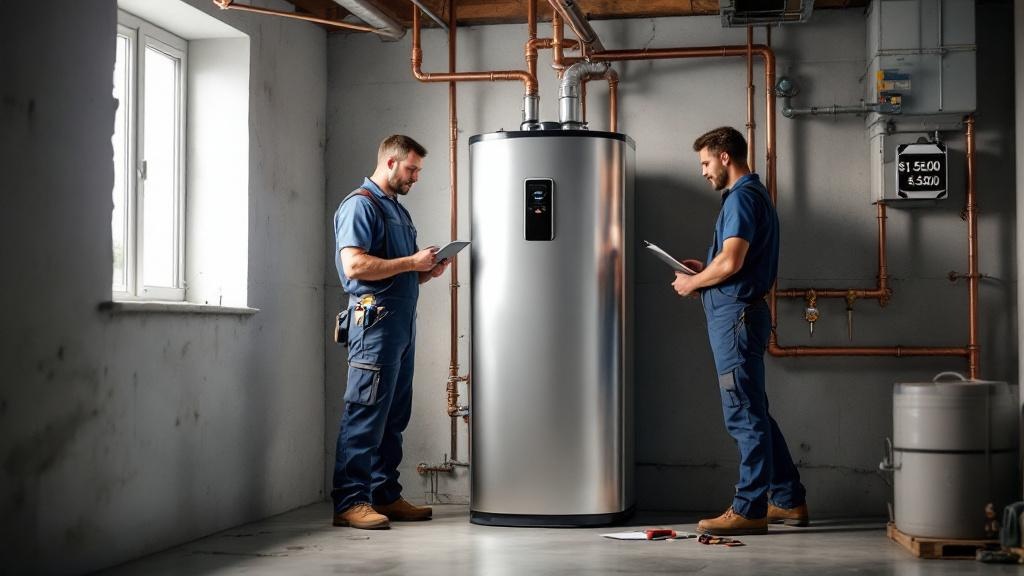
What is the average water heater replacement cost for a standard home in 2026?
The average water heater replacement cost typically ranges between $1,200 and $3,500 for a standard tank installation. This price includes both the unit and the professional labor required for setup. Most homeowners pay toward the lower end of this scale for basic 40-gallon or 50-gallon natural gas models. High-efficiency systems or those requiring extensive venting work can push the final bill toward the higher end of that range. You can often minimize long-term expenses by changing anode rods every few years to extend the life of your new tank.
How much does it cost to switch from a tank to a tankless water heater?
Switching to a tankless system increases the average cost of water heater replacement to between $3,000 and $6,000, depending on your home’s infrastructure. While the units themselves are more expensive than traditional tanks, much of this cost stems from necessary structural upgrades. Plumbers often need to install larger gas lines, specialized stainless steel venting, or upgraded electrical circuits to handle the high demand of an on-demand system. Although these units provide endless hot water, they require a significantly larger initial investment than standard tank models.
Does the fuel source significantly change the average water heater replacement cost?
Yes, the fuel source is a major factor in the total price of a new installation. Electric water heaters are generally the most affordable to purchase and install, typically costing between $1,000 and $2,100. Natural gas models are slightly more expensive due to complex venting requirements and gas line connections, while propane and oil-fired heaters tend to have the highest equipment costs. If you are replacing an existing unit with the same fuel type, labor costs will remain lower since the existing pipes and vents are already in place.